


CLOUDBURST KISSENA PARK - NYCDEP CLOUDBURST HUB PROJECT
KISSENA, QUEENS

Kissena Cloudburst Hub is a district-scale stormwater and public-realm upgrade that links right-of-way interventions with parkland improvements in Queens. The project pilots NYCDEP’s cloudburst approach to handle short-duration, high-intensity storms while keeping the park open and usable. By coordinating street retrofits and on-site storage, the hub turns essential infrastructure into an everyday community asset.


Modeling identified recurring flood hotspots during 2.1 in/hr events; the hub responds with a layered system in streets and within the park. Approximately 89,000+ linear feet of prototypical permeable precast concrete pavers (PPCP) detain or infiltrate runoff per subsurface conditions. Street-level measures work in concert with subsurface storage on parkland, reducing surface ponding and peak flows during cloudburst events.


The site sits within a residential fabric surrounded by multiple open spaces that are often compromised by flooding. On-site conditions include a wet-foot woodland, mature trees, and high groundwater, requiring light-touch grading and careful protection strategies. The design preserves these ecological assets while restoring dependable access, play, and passive use for nearby residents.


Community engagement shaped priorities for flexible turf, a cricket field, comfortable seating, and safe, intuitive paths that tie into the neighborhood network. Feedback emphasized year-round usability and quick recovery after storms, informing grading, materials, and furniture choices. The result is a park that works during rain events and welcomes people the rest of the time.
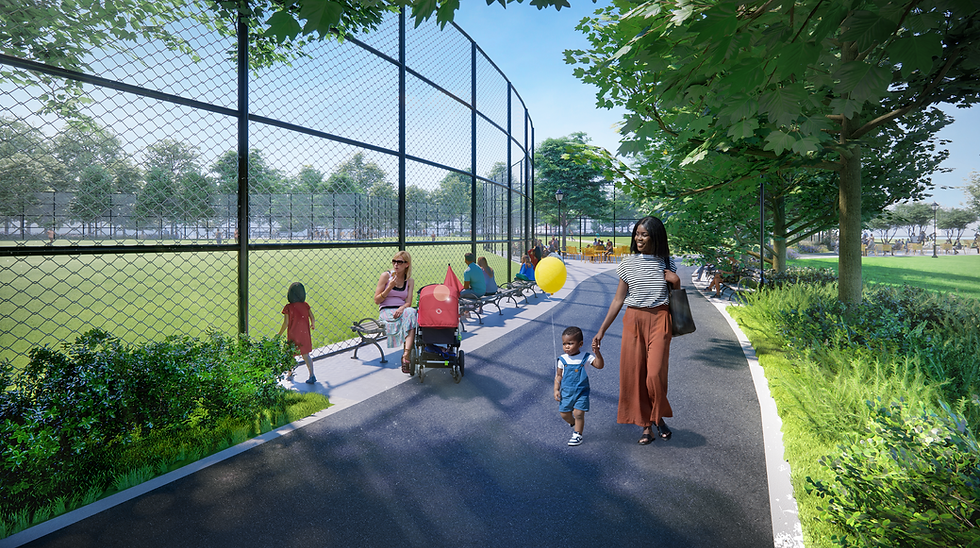


The Kissena Cloudburst Hub integrates stormwater performance, recreation, ecology, and placemaking into one coherent system. Subtle grading guides water into subsurface storage, preserving large, flexible lawns for sports and gatherings. Circulation is legible and universally accessible; seating is plentiful and varied for watching games or finding quiet shade. Historic-style benches and lighting provide a familiar, calming character, while selective native plantings add human-scale texture and four-season interest in this predominantly wooded park.
This thoughtfully balanced integration of contemporary stormwater infrastructure with traditional landscape placemaking strategies exemplifies a successful synthesis of modern ecological engineering and nostalgic urban design, creating an inviting, sustainable, and resilient community space.
Client:
Collaborators:
New York City Department of Transportation, New York City Department of Parks & Recreation, eDesign Dynamics
Status:
Ongoing